


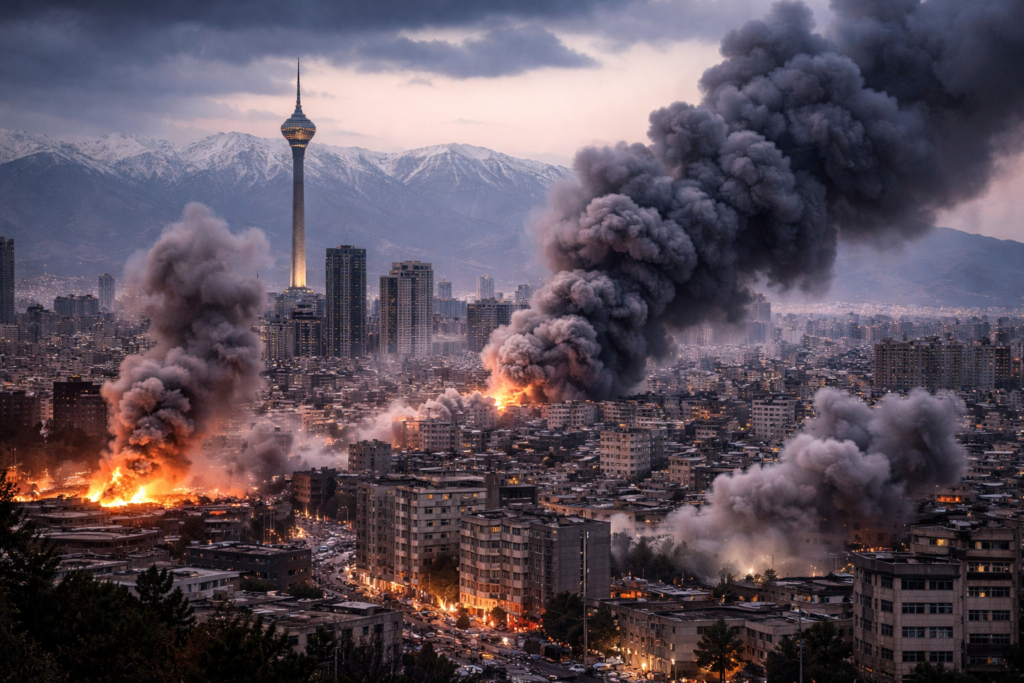
Iran Israel Conflict Live Updates: Tehran witnessed powerful explosions today as retaliation strikes intensified following major military escalation in the region.
The Iran-Israel conflict suddenly escalated today when Israel and the United States jointly launched coordinated air and missile strikes against several Iranian targets. The attacks focused on military infrastructure and government installations, followed by reports of powerful explosions in Tehran and other cities. Israeli officials confirmed that the operation was a major combat initiative aimed at weakening Tehran’s military capabilities and controlling future threats. Reports of explosions emerged in several urban areas as the strikes began, demonstrating the scale and intensity of the operation.
In response, Iran immediately launched a barrage of missiles and drones, targeting Israel as well as U.S. military bases in the Gulf region. According to reports, installations located in Qatar, Kuwait, the United Arab Emirates, Jordan, and Bahrain were also targeted. This retaliation has not limited the conflict to just two countries but has rapidly spread tensions throughout the region. The situation is now on high alert, and international leaders are appealing for diplomacy and restraint to prevent the conflict from escalating into a full-scale war.

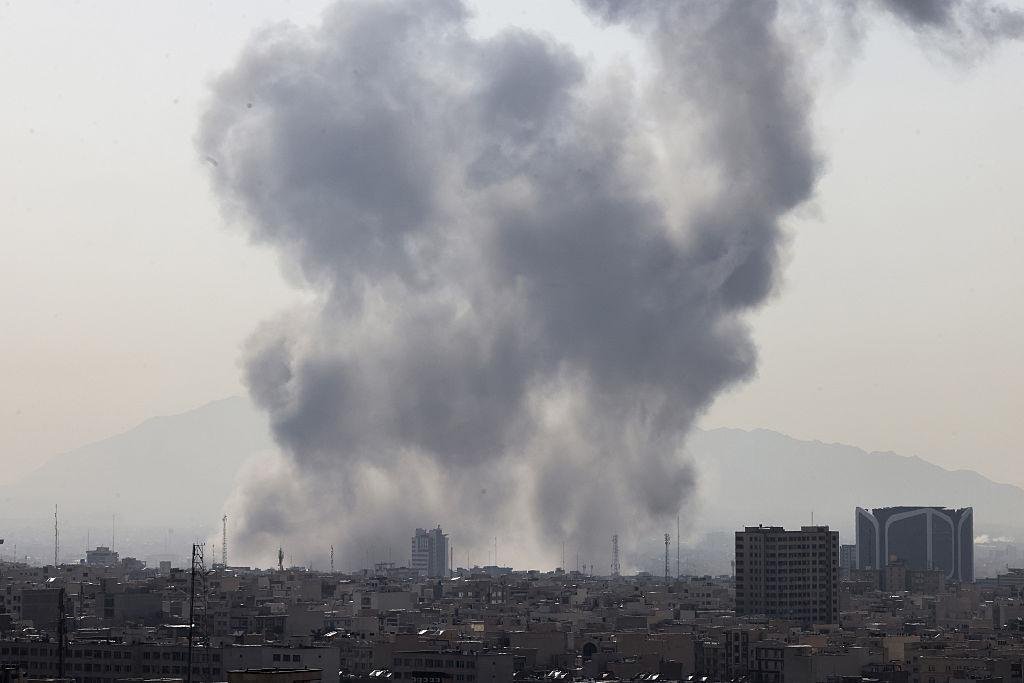

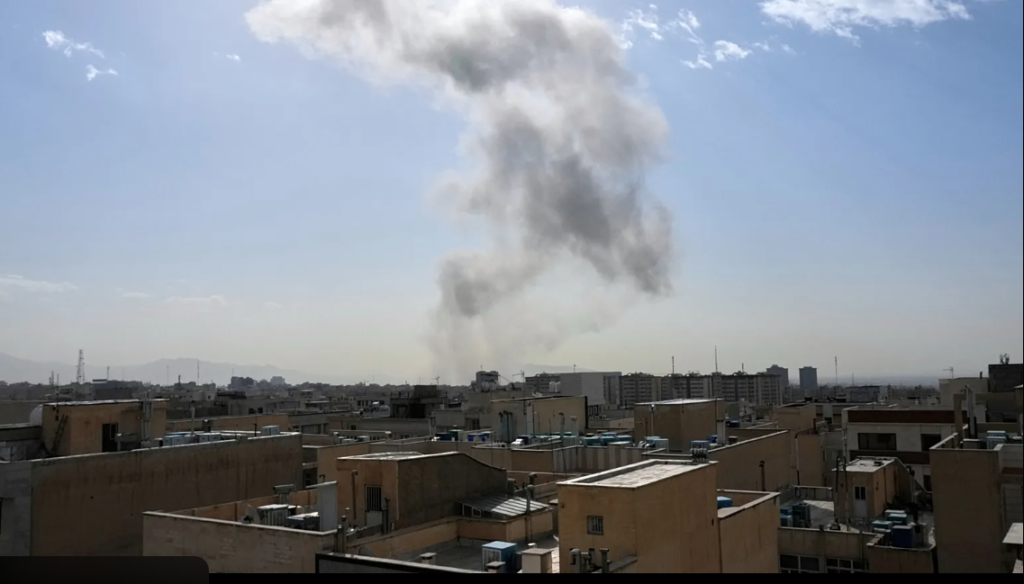
AI-generated illustrative image via OpenAI DALL·E
The Iranian military has declared that it will continue to attack all forces supporting this offensive. Meanwhile, Israel has activated its air defense systems and temporarily closed schools and public gatherings under emergency orders. Security measures have been further tightened amid sirens and alerts.
International reactions have begun. Some countries are calling for restraint and calm, while others have openly condemned these actions. The conflict has also impacted commercial aviation, with multiple airlines suspending flights over Middle East airspace due to safety concerns.
As tensions rise, global leaders are demanding urgent diplomatic talks to prevent the situation from escalating and a major regional war can be avoided.
On the morning of February 28, 2026, the United States and Israel jointly launched a coordinated and large-scale air assault on Iran. The operation targeted military sites, leadership facilities, and strategic infrastructure in Tehran and other major cities. According to reports, strong explosions were heard in several locations, and the situation immediately went on high alert.
Iran immediately launched a swift and massive retaliation. Iranian forces fired dozens of ballistic missiles and deployed armed drones, which were directed towards Israel and U.S. military bases in the Middle East. Targets included countries like Qatar, Kuwait, the United Arab Emirates, Bahrain, Saudi Arabia, Jordan, and Iraq. This counter-attack is being considered a major escalation of hostilities, due to which tensions have increased further in the entire region and the situation has now become quite serious.
These strikes were part of Iran’s declared reprisal operations, which Iranian officials have described as a defensive and sovereign response. They say the attacks by U.S. and Israeli forces were “illegal aggression,” and that Iran is protecting its security and sovereignty. Tehran’s Supreme National Security Council has warned that any country supporting the attack on Iran will be considered a potential target. Iranian commanders have also made clear that there will be no leniency in retaliation.
Explosions and air-defense interceptions have been reported in several parts of the region, as Gulf countries activated their defense systems to intercept incoming missiles. Following this retaliation, emergency measures were imposed in Israel, with sirens blaring continuously and schools temporarily closed. Governments around the world are now calling for restraint and diplomacy, as experts fear the situation could escalate into a major regional conflict.
War Shockwaves Across Iran: Powerful Explosions Rock Multiple Cities as Conflict Intensifies
The conflict between Iran, the United States, and Israel escalated dramatically when multiple explosions were reported in several major Iranian cities following coordinated military operations by the U.S. and Israel. Powerful blasts were heard in Tehran, and large columns of thick smoke were seen rising above urban districts. Reports of explosions also emerged from Isfahan, Tabriz, and other regions.
It became clear that the strikes were not limited to one area but spread to several provinces, intensifying the shockwaves of war across the country. The situation is rapidly becoming serious, and security forces are operating on high alert, while regional tensions continue to rise.
According to reports, explosions targeted key government and military sites, including areas near the offices of Iran’s senior leadership. Emergency alerts were issued following the blasts, disrupting communications systems and daily life. Internet and phone services were temporarily affected in several places, increasing confusion and tension among the people.

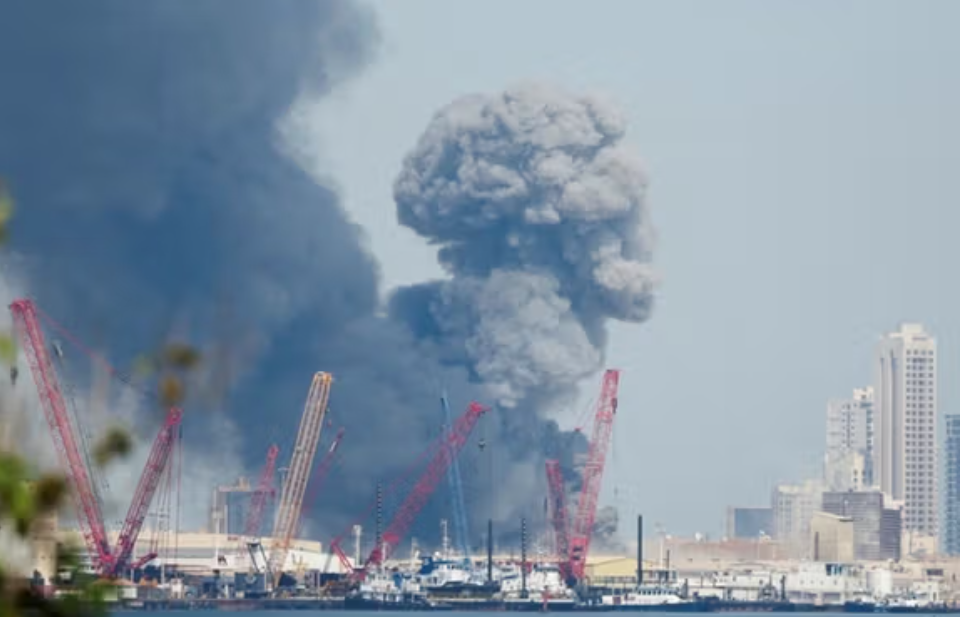
Residents in the capital, Tehran, reported hearing loud detonations and seeing thick clouds of smoke above the skyline. The situation became so serious that civilians were asked to immediately seek shelter. People moved to underground parking and protected areas for safety. These developments have strengthened fears of further escalation, and an atmosphere of uncertainty has prevailed across the region.
These strikes followed Iran’s pledge to strongly respond to “pre-emptive attacks” by the United States and Israel. Iranian officials described these actions as part of a broader military campaign. This campaign also included retaliatory missile launches toward U.S. and allied positions in several parts of the Middle East, further escalating the conflict.
As the war intensifies, international leaders have warned that the situation could escalate into a wider regional conflict. Many countries are calling for restraint and diplomatic talks to prevent escalation. But on the ground, local populations are facing an immediate impact, with shockwaves from blasts in several Iranian cities disrupting daily life and people following safety measures amid uncertainty and fear.
Live Coverage: Tehran Under Siege as Retaliation Strikes Intensify and Tensions Explode
Tehran faced one of its most tense and unpredictable days as retaliation strikes intensified across the region, and the Iranian capital became the epicenter of a rapidly escalating conflict. Powerful explosions were heard in several districts following coordinated air operations that targeted strategic military and infrastructure locations. Authorities immediately activated city-wide emergency protocols.

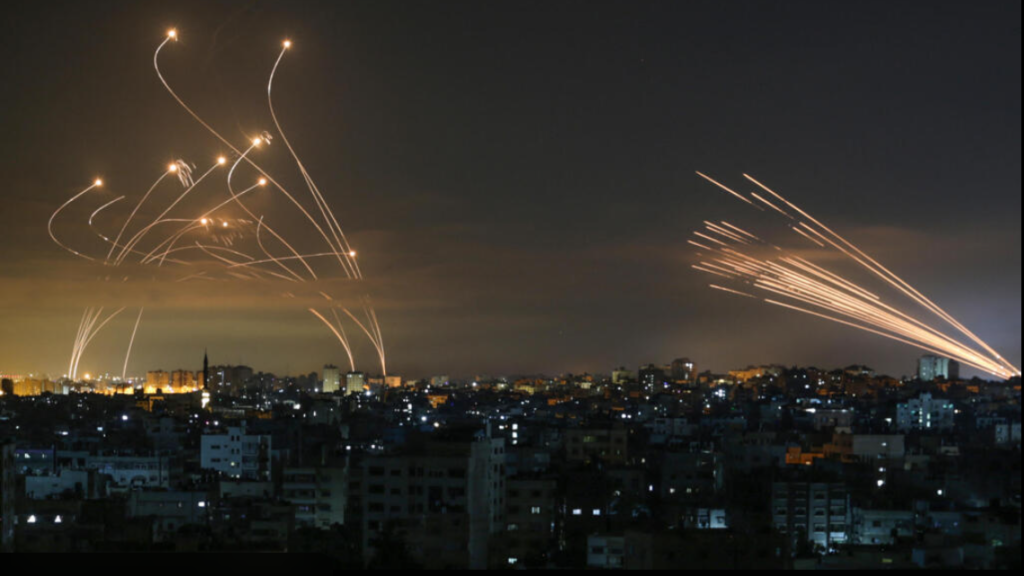
Air-defense systems responded repeatedly, and residents reported hearing loud interceptions in the sky. Sirens and emergency alerts disrupted normal daily life. Thick smoke was seen rising over some parts of the skyline, while security forces quickly sealed off sensitive areas to control panic and maintain stability in the situation Iran Israel Conflict Live Updates.
Government officials immediately attempted to reassure the public, but transportation disruptions and communication slowdowns created visible anxiety among civilians. Many roads were temporarily blocked, public transport services were disrupted, and phone and internet networks slowed. This situation led schools and several public institutions to suspend operations. Families hurried indoors, and businesses closed early due to safety concerns.
Hospitals began preparing for emergency admissions, while rescue teams inspected damaged structures and cleared debris from affected areas. Iranian state media simultaneously emphasized resilience, highlighted emergency coordination efforts, and promised a decisive response to external aggression. Authorities have said that all agencies are working together to keep the situation under control.
Iranian military commanders announced large-scale retaliation operations, launching missiles and armed drones toward Israeli territory and U.S. military positions in the Middle East. Defense officials described these actions as a direct response to earlier air strikes and warned that escalation could have broader and serious consequences if continued.
The impact of this conflict is also clearly visible in regional airspace, where airlines have diverted flights to avoid potential danger zones. Many routes have been canceled or changed, raising concerns among passengers and the global aviation sector. The situation’s expanding reach is creating tension worldwide, and the international community is closely monitoring developments.
Military developments have intensified international reactions. Many world leaders have called for restraint and demanded urgent diplomatic dialogue to prevent the situation from escalating into a major regional war. Governments and international organizations are continuing to emphasize talks and negotiations to control escalation.
Energy markets also reacted immediately, with oil prices fluctuating as experts fear that prolonged instability could threaten global supply routes. The increased risk to oil transport and shipping lanes is raising concerns about the impact on the global economy. Humanitarian organizations have also expressed serious concern for stranded civilians in densely populated urban areas. He warned that if hostilities continue, prolonged disruption, shortages and security risks could increase.
As night approached, uncertainty took a firm grip on Tehran. Security patrols were increased at major intersections, and armed forces are continuously monitoring to ensure a prompt response to any emergency. Residents are constantly following updates and preparing mentally and practically for possible further developments.
Both sides appear determined rather than compromise, which is why the situation remains highly volatile. Observers and security experts are warning that the coming hours could determine the course of the conflict. This confrontation could become one of the most serious crises in the region in recent years, the impact of which could be felt not only locally but also globally.