


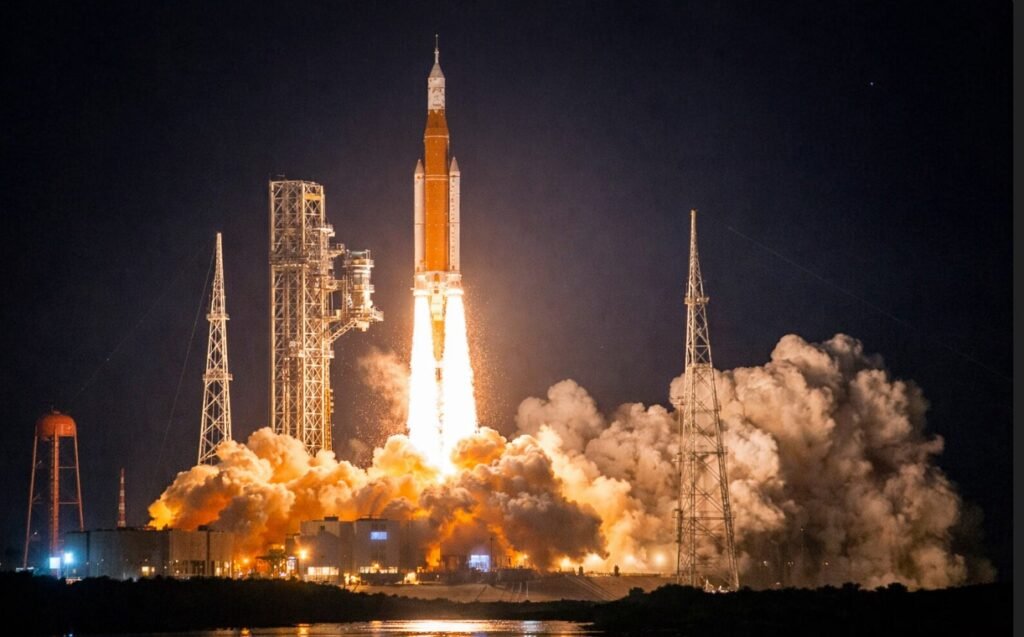
NASA has begun a bold new chapter in modern space exploration, as the Artemis rocket prepares to launch from Earth and take human dreams far beyond our home planet NASA Artemis Rocket Launch .
Engineers, scientists, and astronauts have spent years designing and testing every system so that this mission is not only successful but also transforms the way humans travel in space in the future.
Standing tall and strong on the launch pad, this rocket is not only a symbol of advanced technology, but also reflects years of scientific progress, international cooperation and a new determination to explore the Moon again.
Through the Artemis program, NASA aims to send astronauts farther into space than any crew has gone in recent history, opening new opportunities for long-term Moon research and paving the way for future Mars missions.
As the countdown draws closer, teams at different space centers are actively monitoring weather conditions, propulsion systems and communication networks, as every second counts during launch.
Excitement continues to grow around the world as millions of people prepare to witness the moment when powerful engines ignite and propel the spacecraft into orbit.
Through this mission, NASA wants to test new technologies, study the Moon’s environment, and lay a strong foundation for long-term human presence outside Earth. As the Artemis rocket approaches liftoff, it is carrying not only scientific instruments and exploration goals, but also the hopes of an entire generation that wants to see humanity move confidently into a new era of discovery.
NASA’s Artemis program has ushered in a powerful new era of human Moon exploration, where old space ambitions are now transforming into real mission planning and technological progress. Engineers and mission specialists are continually developing advanced spacecraft systems, lunar landing technologies, and deep-space communication networks so that astronauts can travel far beyond Earth’s orbit and remain safely in space for longer periods of time.
While previous missions focused mostly on short visits, the goal of the Artemis mission is to establish a sustainable human presence on the Moon, preparing to live and work there long-term. This will make the Moon a testing ground for future Mars journeys, where astronauts will test new technologies and survival systems.
Teams at research centers are actively working with international partners and private space companies to build lunar habitats, design next-generation spacesuits, and prepare robotic missions that will map available resources near the Moon’s south pole.
Scientists plan to study water ice deposits on the Moon, analyze lunar soil, and test new energy systems that could support long-term space exploration. As launch preparations progress, astronauts are practicing under tough training conditions to simulate deep-space travel and Moon operations in a realistic way and adapt more easily to extreme environments.
This program is also inspiring an entire generation of students and new innovators, who now see space exploration not as a distant dream, but as an achievable future. By combining scientific discovery, global collaboration, and cutting-edge engineering, NASA is moving toward permanently returning humanity to the Moon.
This is seen not just as a journey for exploration, but as the beginning of establishing the next strong human base in space.

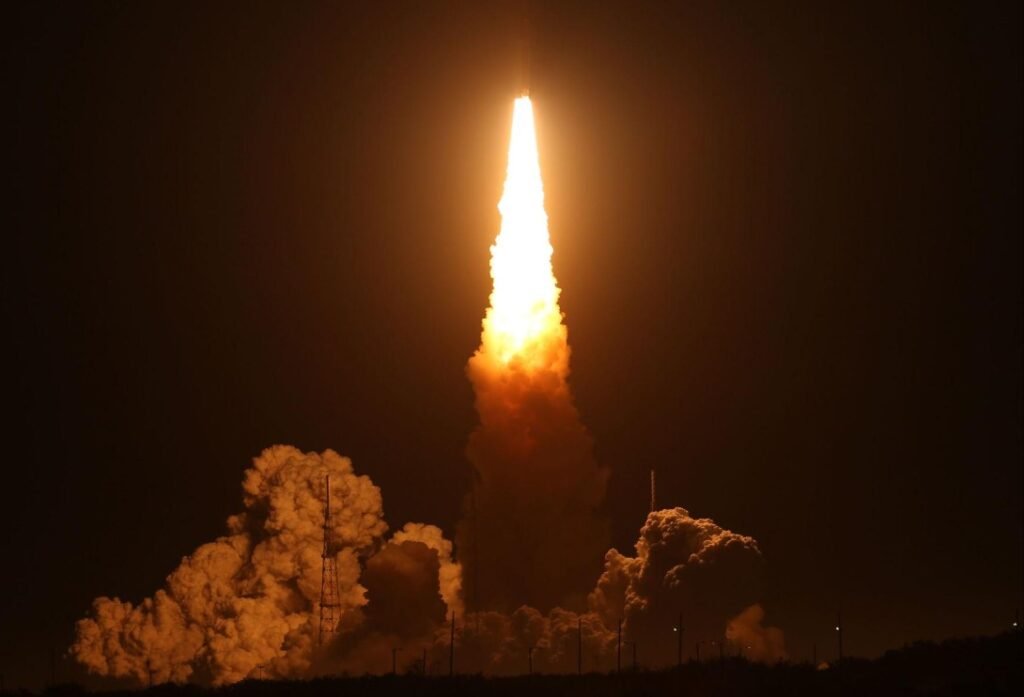

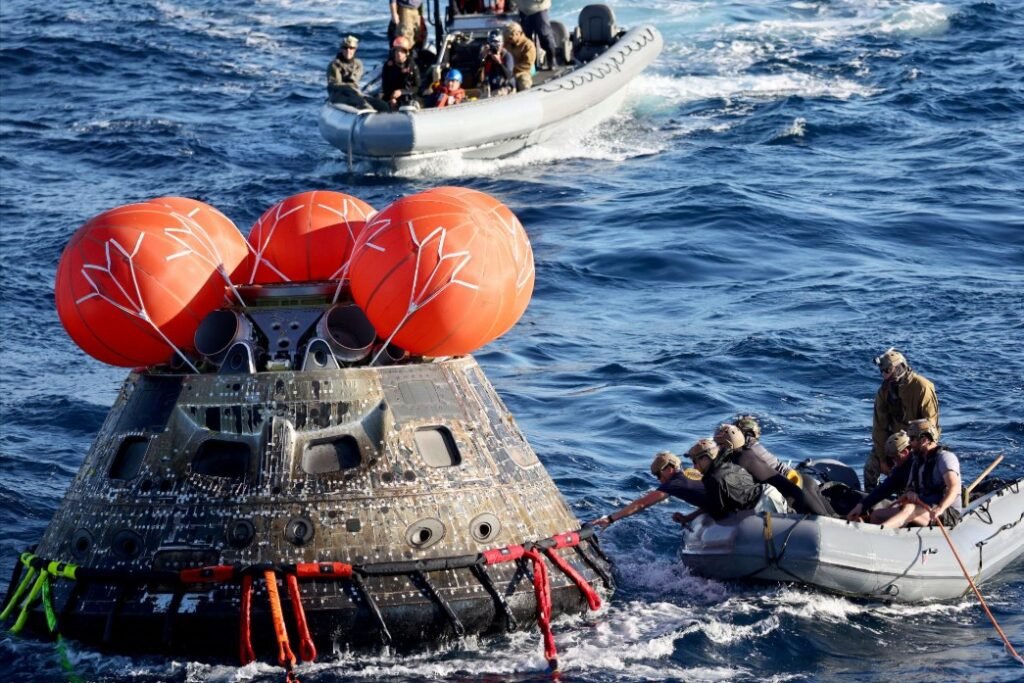
Courtesy of NASA / Official Mission Imagery
Science, Determination, and Hope Unite as NASA Launches Artemis Mission
Science, determination, and hope have come together as NASA launches the Artemis mission, turning years of research and preparation into a pivotal moment in modern space exploration. Engineers are actively guiding the launch’s final readiness stages, while scientists are carefully analyzing every system to ensure the spacecraft performs flawlessly in the tough environment of deep space.
These missions reflect the dedication of thousands of specialists, working together in laboratories, control centers, and testing facilities to design technology that can safely take humans beyond low Earth orbit. Astronauts undergo intensive training for long-duration missions, preparing them both physically and mentally to handle the tough challenges of lunar travel and exploration.
As the powerful engines ignite and the rocket lifts off the launch pad, teams monitor navigation, propulsion, and communication systems in real time, quickly making critical decisions to ensure mission success.
Artemis is not just a national achievement, but a major global vision, where international partners and private companies are contributing their expertise and innovation to building a sustainable future on the Moon.
Scientists plan to explore water ice deposits on the Moon, test new energy solutions, and collect vital data that could pave the way for future human missions to Mars.
Millions around the world are watching this moment with excitement, as exploration unites humanity through curiosity and shared ambition. Through the Artemis mission, NASA is not only advancing scientific discovery, but also demonstrating that with cooperation, hard work, and imagination, humans can push beyond their limits.
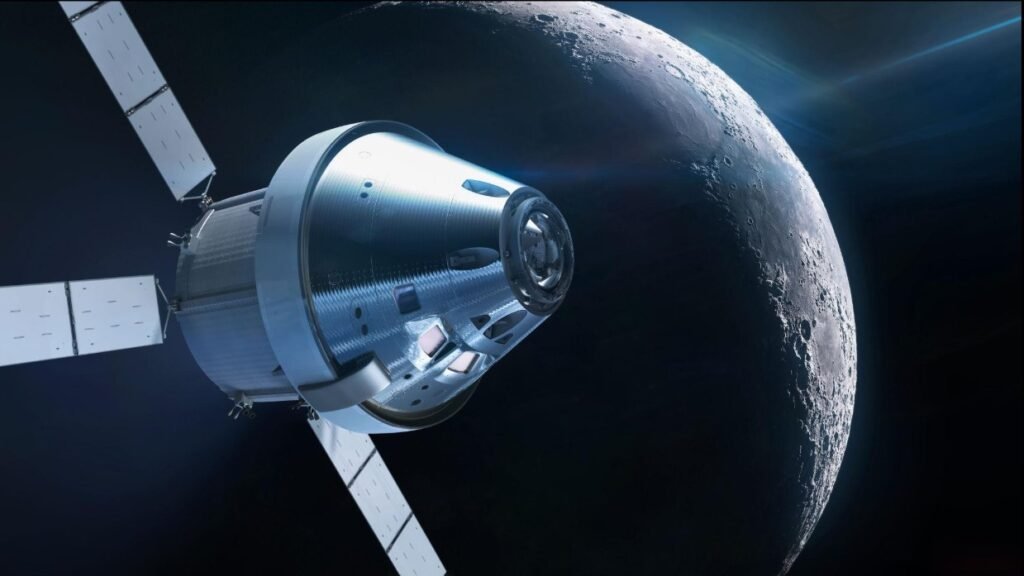
NASA — Artemis Moon Exploration Mission
Following the historic achievements of the Apollo era, NASA has once again strengthened its focus on the Moon, but this time with a bigger vision, combining modern science and long-term exploration goals.
Engineers and mission planners are building on the experience of the past several decades to develop advanced rockets, spacecraft, and landing systems that can support not just short visits but also repeated lunar missions.
Through the Artemis program, NASA aims to return astronauts to the lunar surface and establish sustainable operations there so that crews can live, work, and conduct scientific research for long periods of time.
Teams are continuously studying the Moon’s south pole, where there is a possibility of finding frozen water resources that could help in future habitats and fuel production. In this way, the Moon is being made a stepping stone for deep space travel.
Astronauts are training in extreme environments on Earth to prepare for challenges like the Moon’s tough terrain and isolation.
Scientists are also refining new technologies that can generate energy, control radiation exposure, and maintain communication across the vast distances of space.
International partners and private aerospace companies are also actively contributing new innovations, making this mission an example of global collaboration and a shared commitment to exploration.
As launch preparations progress, NASA is not only focused on reaching the Moon again, but also building the infrastructure needed for humanity’s next great journey to Mars.
By combining lessons learned from the Apollo missions with cutting-edge engineering and new determination, the agency is leading a mission that is turning past successes into a strong foundation for humanity’s future beyond Earth.